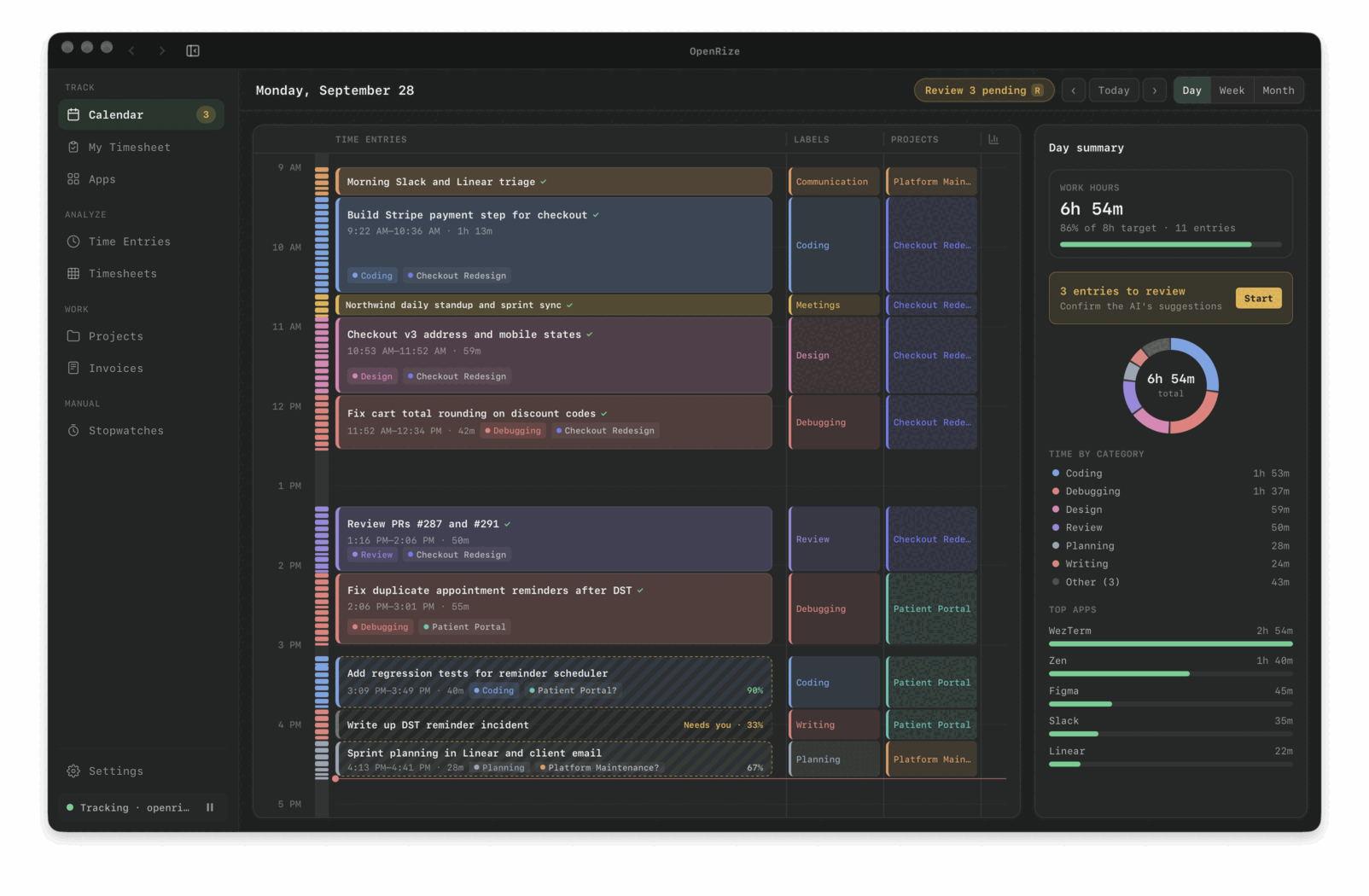
You install it.
OpenRizeOpen it. Tracking starts. No account.
Typical appCreate an account, verify your email, then start a trial.
 Flow State Period tracker · iOS Live
 Cupboard Pantry tracker · iOS Beta
 OpenRize Automatic time tracker · macOS Live
Senior full-stack guidance or dedicated sprint delivery.
Start a conversationSame job: know where your day went. One runs on your Mac, is open source and costs nothing. The other is a paid subscription.
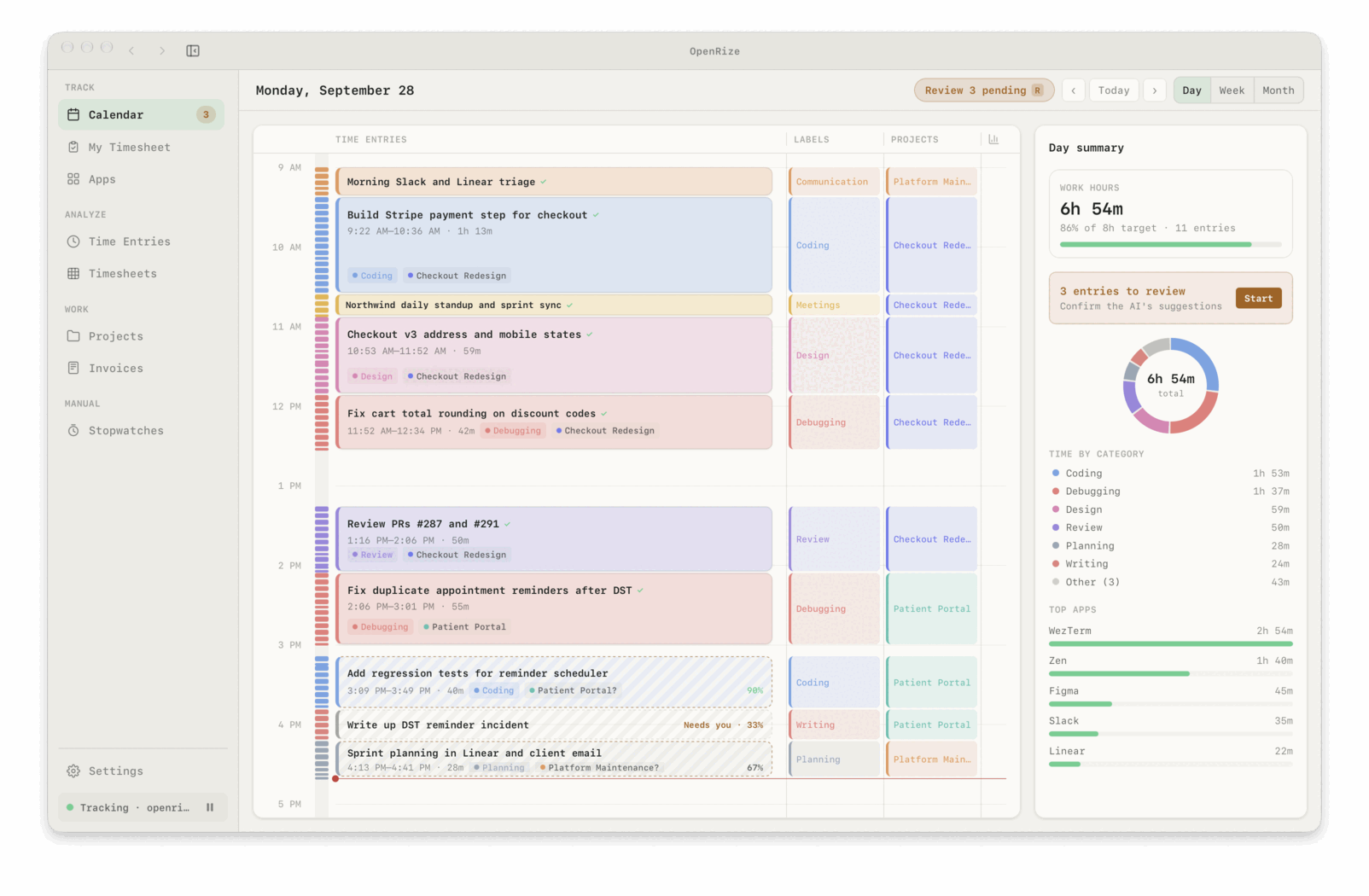
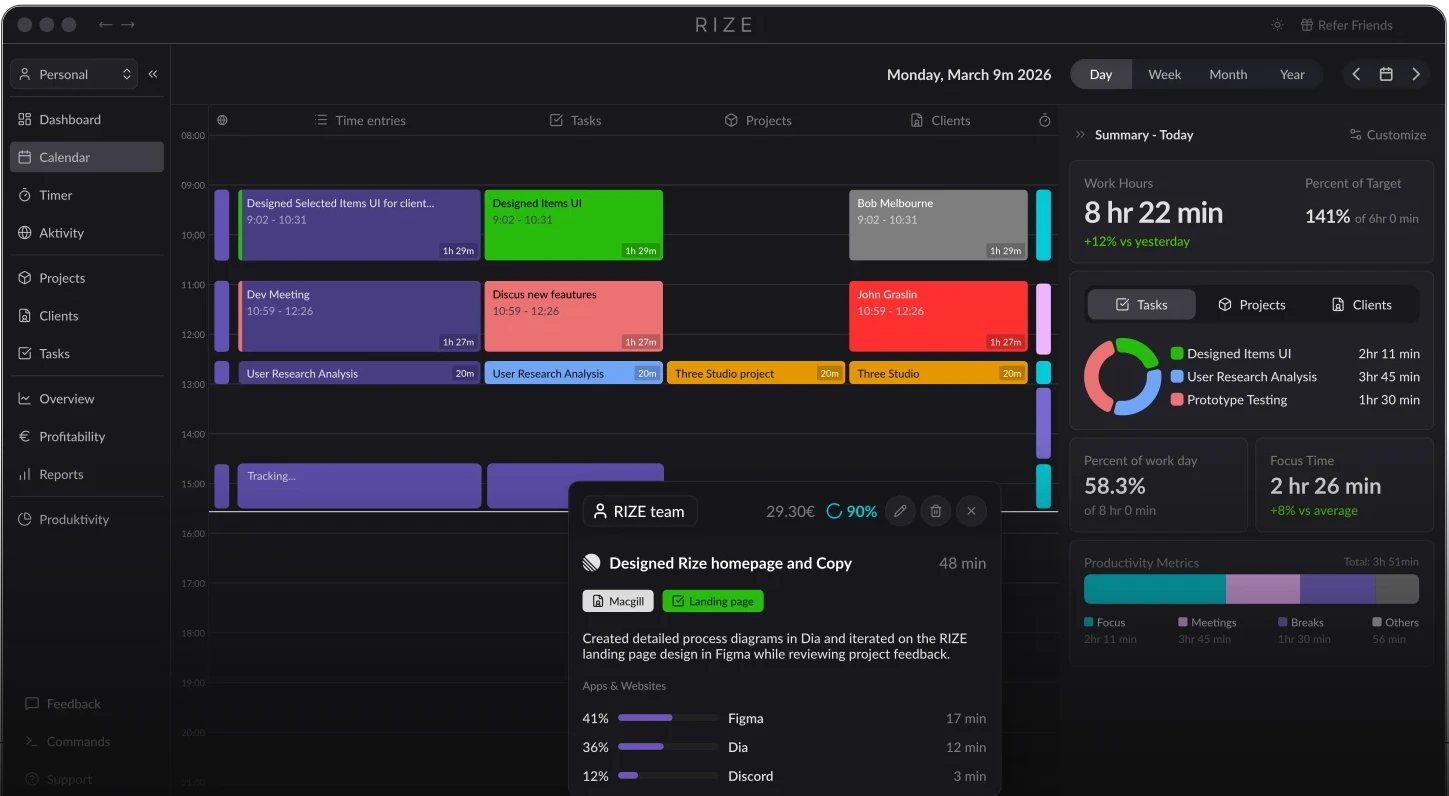
Every claim about Rize comes straight from its own pricing, privacy or security page.
| Topic | OpenRize | Rize |
|---|---|---|
| Price | Free and open source | Individual plans on annual billing: Basic $9.99/mo, Pro $23.99/mo, Max $39.99/mo (monthly billing $12.99 to $49.99/mo). A 7-day free trial, and "There is no permanently free tier". |
| Platforms | macOS | "Rize is currently available for macOS (Mojave 10.14.6 or later) and Windows (Windows 10 or later)." |
| Screenshots and keystrokes | None, ever | Standard tracking "never takes screenshots, records video, or captures keystrokes". By default it reads the app name, window title, URL and timestamps. An optional Screen Text feature reads window text and, in Cloud mode, sends the image to Google Vertex AI for processing. |
| Where data is processed | On your Mac. No cloud. | Rize "runs on Google Cloud Platform in US regions" with data encrypted at rest. An LLM provider uses activity metadata to draft descriptions and tags. |
| Account | No account | Data is accessed through a personal password-protected account, and plans are billed per account. |
Rize publishes different hosting details on different pages, so we only cite its security page. We left out rows (such as source code) where it makes no statement. Company names appear only to identify them; we use no logos or trademarked interfaces.